Posted in Books, Calculating, Remainder of One

How many bugs are under the leaf?

Digit Dog was watching the 10th Bug Squadron marching past but he was a little late and some of the bugs had already marched under the leaf. He is wondering how many are under the leaf.

under the leaf

How many bugs are in the 10th Squadron altogether?

How many groups of 2 can they make?

How many bugs can you see? How many groups of 2 can you see?

How many bugs are under the leaf? How many groups of 2 are under the leaf?

How can you work it out?

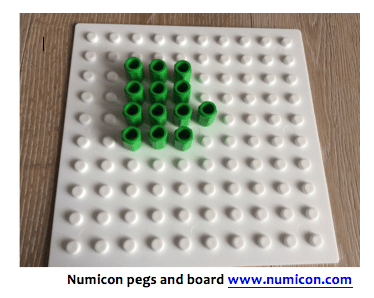
You might want to use Numicon to help you think about the problem.

IMG_1804

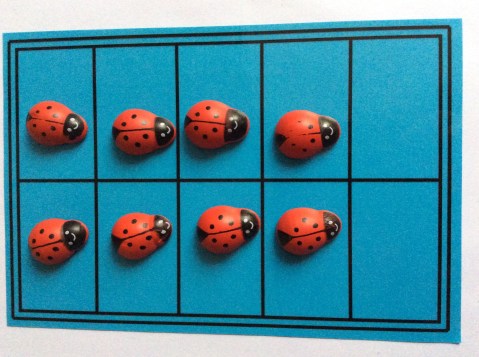
Or a ten frame might help.

IMG_1805

Make up your own problems like this.

Posted in Books, Remainder of One

Marching in line

More bug fun inspired by A Remainder of One

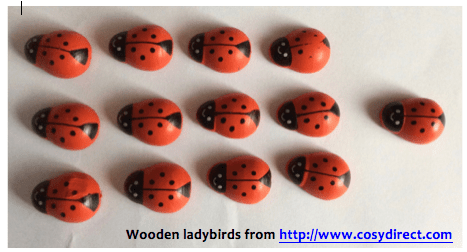
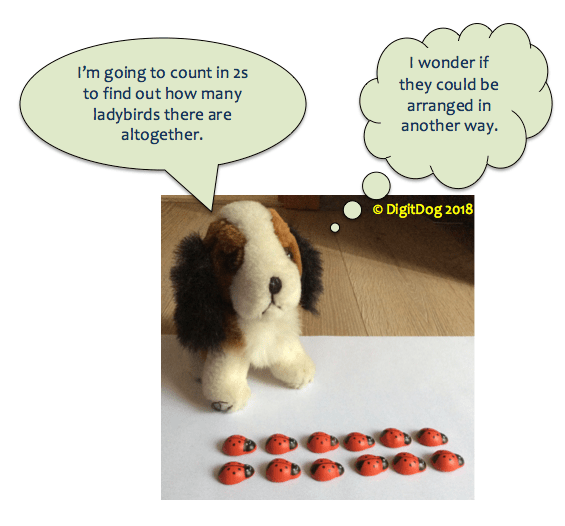
The 12th Bug Squadron is ready to parade. Digit Dog has put them in twos.

Explore the array using mathematical language:

  • Count in twos to find out how many there are – 2, 4, 6, 8, 10, 12.
  • Write an addition sentence 2 + 2 + 2 + 2 + 2 + 2 = 12
  • Write a multiplication sentence 6 x 2 = 12
  • Describe the ladybirds with words “6 groups of 2”.
  • Ask “how many groups of 2 are there?” “How many groups of 2 equal 12?”

counting in 2s

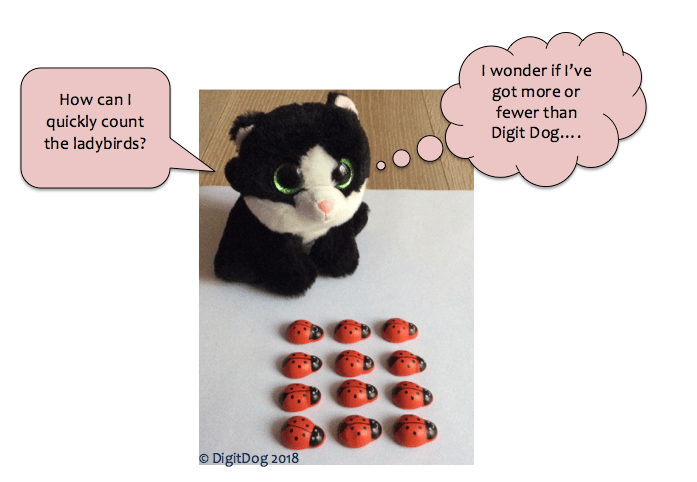
Calculating Cat’s ladybirds look different. She wants to quickly count how many ladybirds she has. How could she do it?

What number sentences could she say and write?

counting ladybirds


What is the same and what is different about the two groups of ladybirds?

Could they be arranged in any other way?

What if you put them in lines of 5? What do you notice?

Posted in Books, Remainder of One

More maths with bugs

Another activity inspired by A Remainder of One

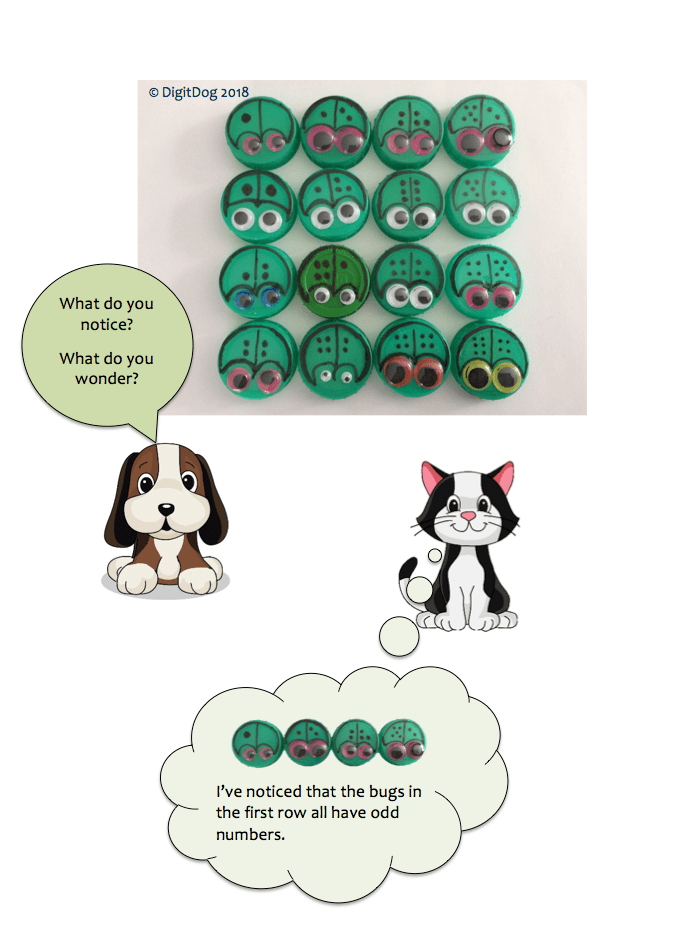
The members of the 16th Bug Squadron have organised themselves for the Queen’s parade.

Screenshot 2018-06-06 12.20.39

Is Calculating Cat correct? Or has she made a mistake?

What do you notice about the bugs?

What can you say about:

  • the number of rows?
  • the number of colums?
  • the number of bugs?
  • patterns in the numbers on their backs?
  • diagonal patterns?
  • odd ones out?
  • totals of spots?
  • their eyes?


Could the 16th Squadron organise themselves in a different way?

Remember each row has to have the same number of bugs in it because “the queen likes things tidy”.

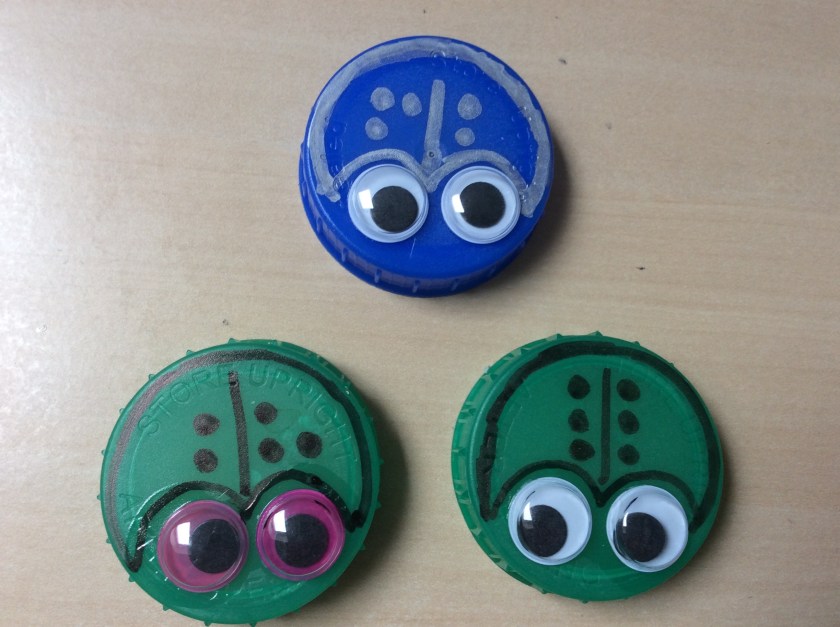
The bottle top bugs are easy to make with a Sharpie pen and goggly eyes (I got mine from The Works)

Posted in Remainder of One

How many ladybirds are going to the bug parade?

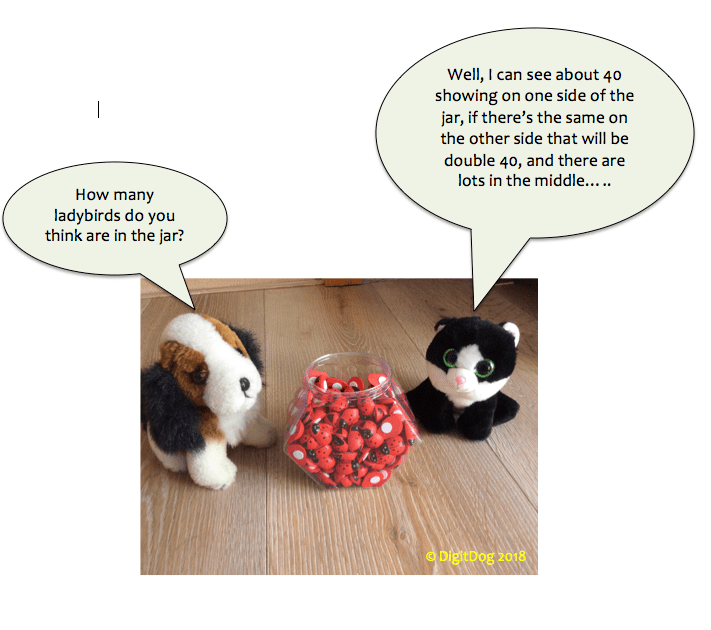
Can you estimate how many ladybirds are in the jar?

What is a sensible guess? 5? 50? 100? Why? Why not?how many?

Calculating Cat is using her reasoning skills to estimate how many ladybirds there are. What do you think? Do you agree with her?

counted ladybirds

How many ladybirds has Digit Dog taken out of the jar?

How did you count them? What is the quickest way to count them? Explain your thinking.

What is your estimate now? Do you think there are more or fewer ladybirds in the jar than out of it?

Make up your own challenge like this.

Posted in Books, Counting, Remainder of One

A Remainder of One by Elinor J. Pinczes

IMG_1785

Great book for investigating division and remainders and arrays and multiplication and number patterns and …………..

The 25th bug squadron (it has 25 bugs) needs to organise itself into lines to march in the bug parade.

“The 25th squadron marched past the bug crowd,

bound and determined to make their queen proud.

The troop had divided by two for the show.

Each bug had a partner – except soldier Joe”.

Poor Joe is left out and gets into trouble because the queen “likes things tidy”.

Find out what happens when the squadron divides into threes and fours. Guess who is left out each time. However, there is a happy ending when the bugs decide to march in fives:

“Five lines of soldiers with five in each row……

perfect at last – and that’s counting Joe.”

Act out the story with children themselves – What would the name of your class squadron be? What would happen if your class squadron was trying to march in tidy rows to please the queen? How many would be in each row? When would there be remainders like Joe?

What about other classes? Would they march in the same way as you?

Investigate different squadrons and tell their stories.

Use different resources to act out the story and investigate other numbers.

Screenshot 2018-06-01 08.43.46

Screenshot 2018-06-01 08.37.05

Screenshot 2018-06-01 08.35.47

Screenshot 2018-06-01 08.39.41

Screenshot 2018-06-01 08.41.47


Posted in Mouse Count

Pattern Parade

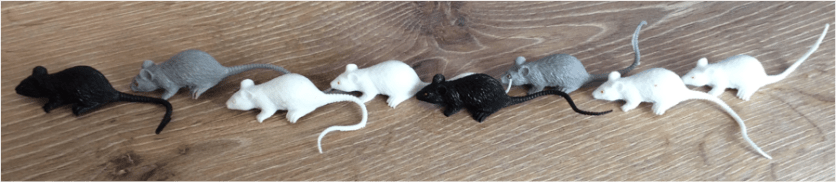
The mice decided to have a pattern parade.

What do you notice?

Which mouse will come next?

pattern parade

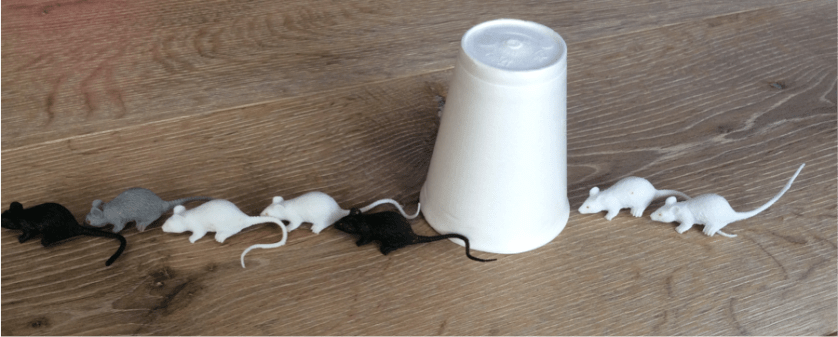
While the mice were having their parade the snake tried to catch them.

captured mouse 1

What colour mouse has snake captured?

How do you know?

Explain your thinking.

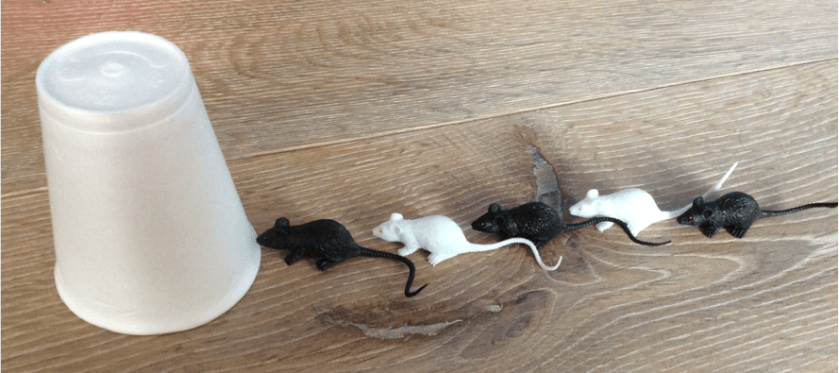
captured mouse 2

What about this time? What do you think?

Try making some patterns of your own.

Posted in Mouse Count

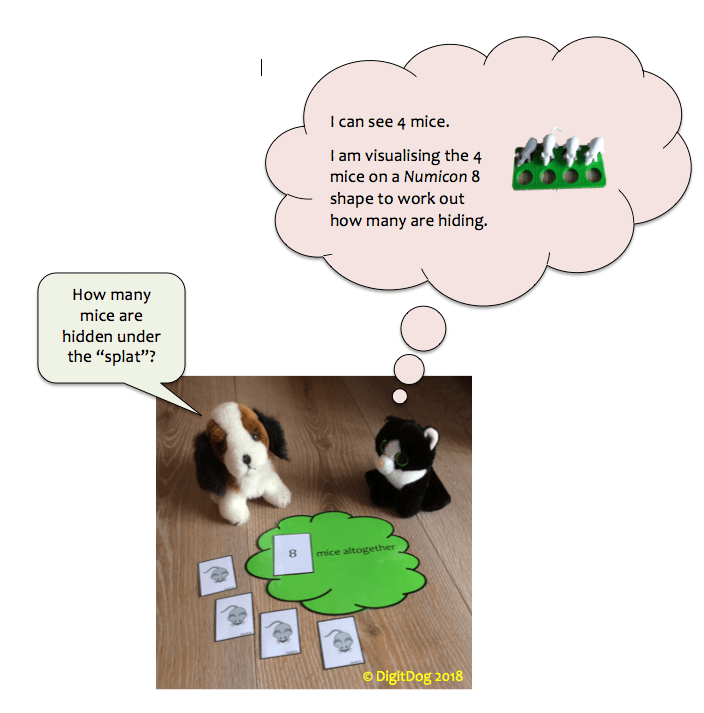
Mouse Splat

Digit Dog and Calculating Cat are playing a game of Mouse Splat. To play the game, first decide on the total number of mice. Put a digit card in the empty box.

Player One close your eyes.

Player Two hide some of the mice under the splat.

Player One open your eyes and work out how many mice are hidden.

Explain how you worked it out. Convince your partner that you are right.Mouse Splat 8

Encourage learners to explain how they worked out the number of mice hiding. They might:

  • Use a Numicon shape and toy mice or pegs (or visualise them like Calculating Cat);
  • Use a 10 frame and objects;
  • Use a number track;
  • Draw a picture;
  • Just know the number bond.

Record some number sentences to show how many different ways the mice can hide.

Posted in Mouse Count

Mouse Count 7

Counting in 2s

Screenshot 2018-05-02 08.48.47

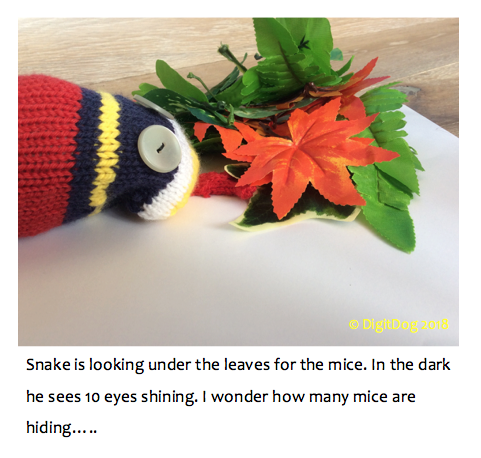
How many mice could it be?

Could it be 1 mouse? Why not? Is it more than one mouse? How do you know?

Could it be 50 mice? Why not?

Encourage estimation by suggesting numbers that are obviously wrong and asking learners to explain why.

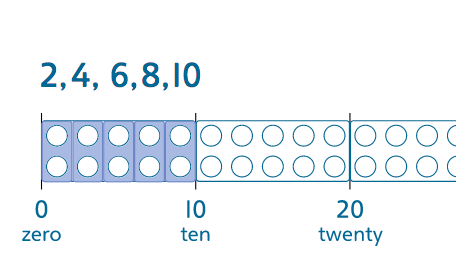
Count up in 2s to 10 – use the Numicon shapes or Cuisennaire rods as you count. Link with grouping, so “how many 2s are in 10?”

Screenshot 2018-05-02 09.03.50

Place the 2 shapes on the number line as you count in 2s.

How many 2s equal 10?

Five 2s equal 10.

Five groups of 2 eyes equal 10 eyes altogether.

How many 2s in 10? There are 5 2s in 10.

Screenshot 2018-05-02 09.15.43

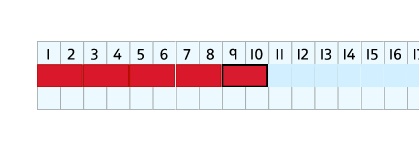
Put the 2 rods in the number track.

Screenshot 2018-05-02 08.58.49

Screenshot 2018-05-02 09.16.59

Or use the 10 shape or 10 rod because you know there are 10 eyes altogether.

What about this?

Screenshot 2018-05-02 09.11.18

Make up your own problems with different numbers of eyes.

What do you notice about the numbers of eyes?

What if……….

……..you could see ears wiggling?

…….or whiskers twitching?

Posted in Mouse Count

Mouse Count 6

More thinking about the mice

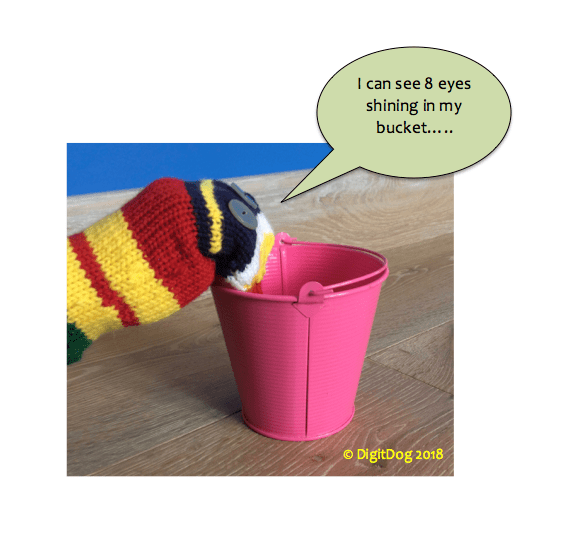
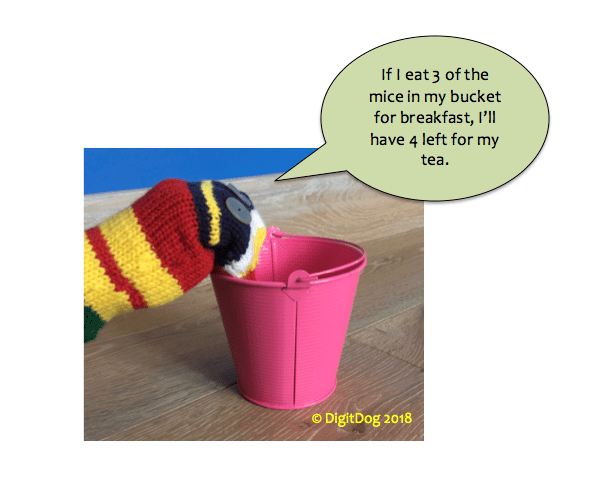
This time we are trying to find out how many mice the snake started with.

Screenshot 2018-05-01 18.50.04

How many mice were in the snake’s bucket to begin with?

How can we work it out?  The important thing is to make sense of the problem. Encourage children to explain what they did and why it makes sense in this context. Whatever they use, do and say should be clear enough for someone else to understand their thinking.

Learners might want to:

  • use some toy mice to help make sense of the problem
  • act it out with their friends
  • explain the problem in their own words
  • use counters to represent mice
  • draw pictures of the mice
  • use a part-whole model
  • visualise the mice
  • use a ten frame and mice or counters
  • use Numicon shapes or Cuisennaire rods
  • use number bonds


What about this problem?

What’s different? What’s the same?

Can you use the same strategy to solve it?

What are you thinking?

Screenshot 2018-05-02 08.36.56


Posted in Mouse Count

Mouse Count 5

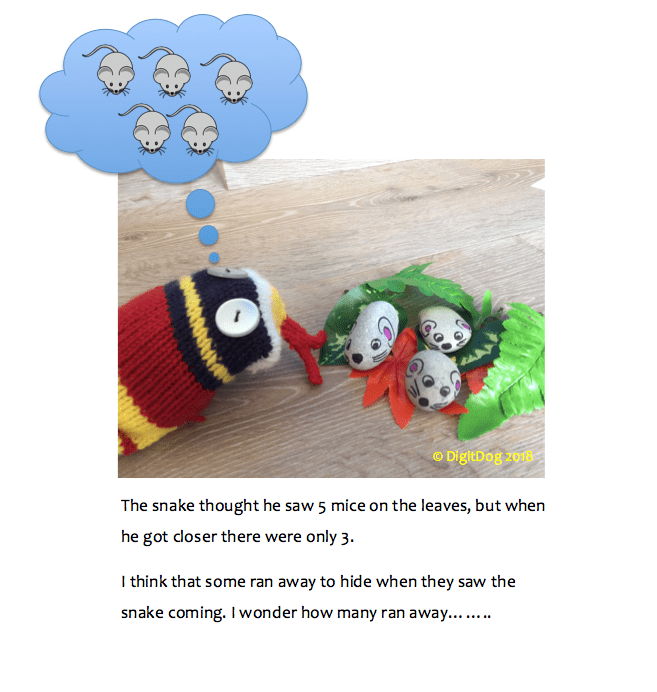
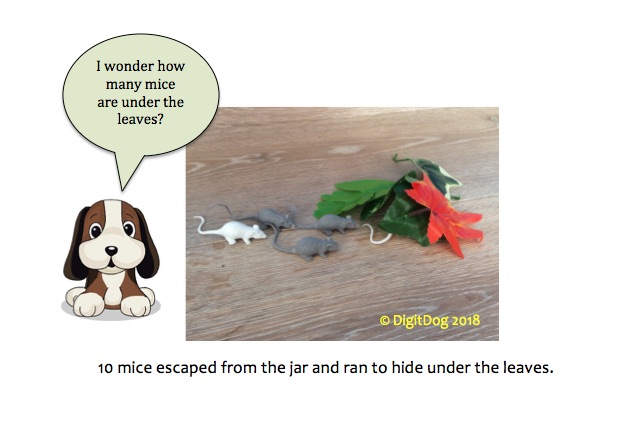
The mice are hiding

Under the leaves

This type of word problem requires more thinking than the problems where the end result is unknown e.g. “There are 4 mice outside and 6 mice inside the jar. How many mice are there altogether?” or “There were 10 mice in the jar, 4 mice escaped, how many are left in the jar?”

Ask learners to:

  • Explain how to find out how many mice are under the leaves.
  • Describe the strategy they have used:
    • act it out – with children or toy mice
    • use counters to represent mice
    • draw pictures
    • use a ten frame
    • use Numicon
    • use number bonds
  • Convince everyone that their answer is correct.

What number sentence can you write about the problem?

Make up some of your own problems like this one.

What if……….

………more than 10 mice escaped?

………fewer than 10 escaped?

…….the story wasn’t about mice?