
Are you still keen to solve Digit Dog’s challenges? Before clicking on the snowmen, have a look at them and think:
What do you notice?
What is the same about the snowmen?
What is different about them?
Can you sort them into groups?



Are you still keen to solve Digit Dog’s challenges? Before clicking on the snowmen, have a look at them and think:
What do you notice?
What is the same about the snowmen?
What is different about them?
Can you sort them into groups?
Click on the images to reveal the second week’s challenges.



Click on the images to reveal the first week’s challenges.
December 2nd
December 3rd 
 December 4th
December 5th
 December 6th
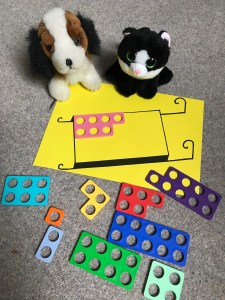
You will need Santa’s sleighs (download and print) and a set of Numicon® shapes. Match the shapes to the spaces on the sleigh.

Ask:
How many shapes do you need?
Which shape will fit here…..?
Is the shape that goes here big or small? Bigger / smaller than a red one?
Can you take away one shape and put two in its place?
Which shapes are easy to find?
5. Start with the blank sleigh and ask learners to use the Numicon shapes to cover it in any way they can.
How many different ways can you do it? Compare your sleigh with your friend’s. What’s the same and what’s different?
What if…………
You weren’t allowed to use the same shape more than once? How many ways can you do it? Is this more difficult? What are you thinking?
Can you use one shape repeatedly to cover the sleigh? Which shapes will work? Which won’t? Why?
What is the fewest number of shapes you can use? The most?
You use only odd shapes? Only even?
Find more ideas in the Santa’s Sleigh Challenge Booklet
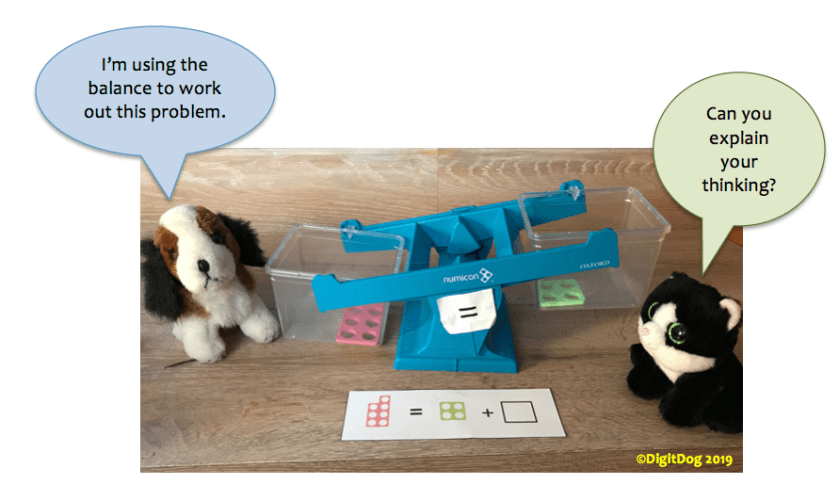
The idea of equal value is fundamental to mathematical understanding. Children need to understand that the “=” symbol means “equal value” and not “here is the answer”.
Ask:
How can you make the scales balance?
Which Numicon® shape could go in the pan balance?
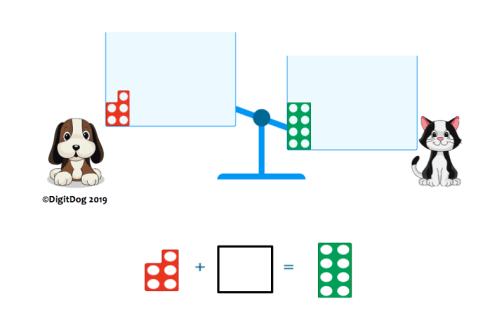
What about this one?
How are you going to solve it? Explain your thinking.
What if ………..you changed the shapes?
Now using numerals.
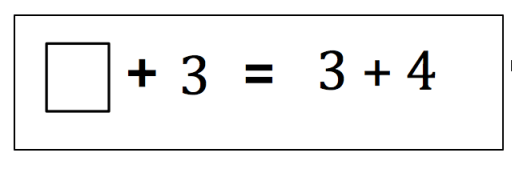
Can you model this with the pan balance and Numicon® shapes?
What’s the missing number? Explain how you know. Record the sentence.
Make up some of your own.
Make sets of problems like this to put with a pan balance in your enhanced provision.
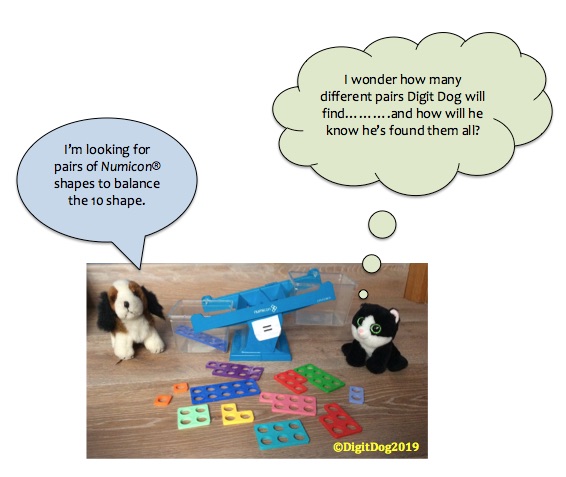
Numicon® shapes are weighted and so are the perfect resource for exploring equivalences. Make sure that learners have had the opportunity to play with the scales and the shapes before doing the challenge.
Ask:
How are you going to record what you have found?
Learners might:
Are all the pairs different?
How do you know that your pair of shapes are equal to 10?

2. Use a pan balance working board (download here) to record the shapes on.
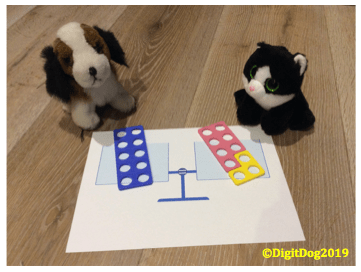
3. Select a written number sentence (download here) that matches their shapes.

4. Record in their own way.
5. Record number sentences.
Digit Dog is looking for two Numicon® shapes that are equal to the 10 shape. Calculating Cat is challenging him to find another two shapes, and then another two, and then another two.
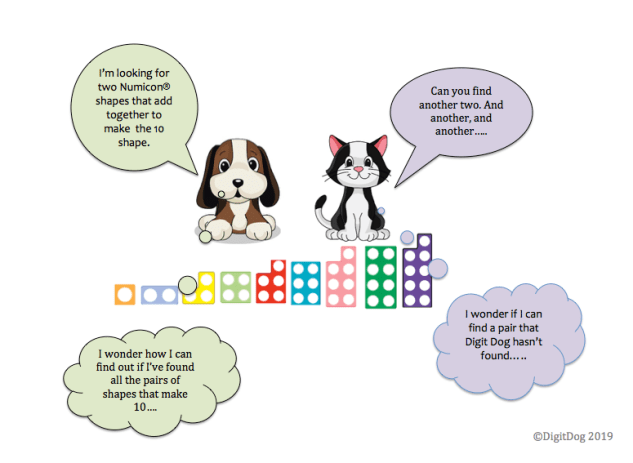
Find one example, then another, then another, then one your friend hasn’t found is a good strategy to encourage learners to use their reasoning skills. Once they have found one pair of shapes challenge them to find another pair, ask:
Is this pair different?
How will you know when you have found all the pairs?
How are you going to record your work?
Look at the pairs that your friend has found. Are they the same? Different?
Are there any shapes you haven’t used? Why?
Encourage learners to check their pairs by putting them on the 10 shape.


Can you put your pairs of shapes in order?
Why can’t you use the 5 shape?
What if……….
You choose three shapes to total 10? How many ways can you do it?
Digit Dog and Calculating Cat are finding pairs of digit cards that make 10.
Digit Dog has found two cards that total 10. Calculating Cat is challenging him to find another two cards, and then another two, and then another two.
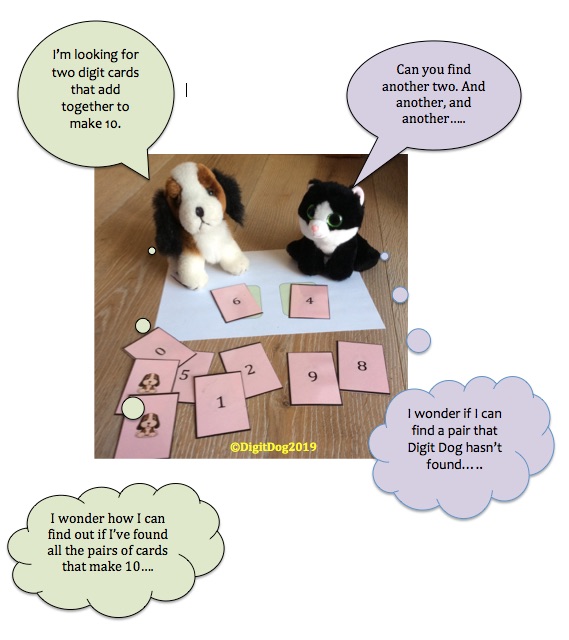
Find one example, then another, then another, then one your friend hasn’t found is a good strategy to encourage learners to use their reasoning skills. Once they have found one pair of cards challenge them to find another pair, ask:
Is this pair different?
How will you know when you have found all the pairs?
How are you going to record your work?
Look at the pairs that your friend has found. Are they the same? Different?
Look for learners who:
What if……….
You choose three digit cards to total 10? How many ways can you do it?
Download a set of Digit Dog’s 0 – 9 cards here Print double-sided to have DIgit Dog on the back!
Download a baseboard here
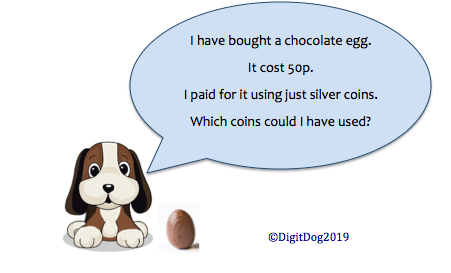
Digit Dog has bought a chocolate egg for 50p. He paid for it using silver coins. Which coins do you think he used? Which coins did he definitely not use? Why?
How many different ways do you think he could pay? Convince me that you have found all the different ways. Explain your thinking.
What is the least number of coins he could use? What is the most?
What if…………..
……..Digit Dog bought something for 50p, 75p, £1……..any amount you like?
……..he could use any coins? How many ways to pay would there be then?
Make up some questions like this for your friends.
Digit Dog is collecting eggs from the Easter Bunny’s store. Here is a map of the store. (download and print your store here)

There are 8 rooms and the number tells you how many eggs are in each room. Digit Dog has to go into the rooms and collect the eggs BUT he can only go into each room ONCE.
How many eggs can Digit Dog collect?
How many different ways can he go though the store?
Can you record his routes? How might you do this?
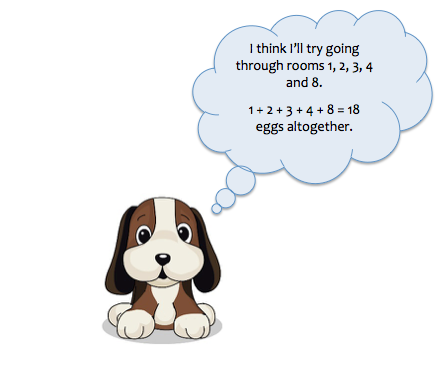
Can you do it a different way, Digit Dog, and collect more eggs?
What’s the most eggs you can collect?
What’s the smallest number of eggs?
Look for children who are planning the routes and can explain their thinking.
Simplify the task

I went to rooms 1, 2, 3, 7 and 8. How many eggs did I collect altogether?
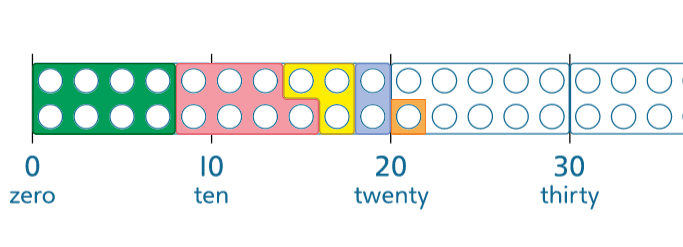
I have put the shapes on the number line so that I can see the total without counting in ones.

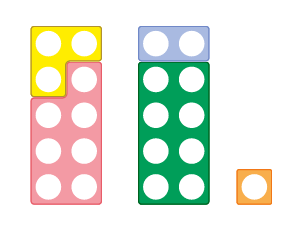
2. Use the blank store and put just numbers 1, 2 and 3 in the rooms.
3. Put just Numicon® shapes in the rooms – no numerals.
4. Put mini-eggs in the rooms. Instead of counting in ones, put the eggs in the Numicon® ten-shapes to find the total.
Extend the challenge
Use the blank store and put higher numbers in each room.
Challenge children to find all possible routes and to explain how they know they have found them all.
Digit Dog and Calculating Cat are using the Numicon® shapes to cover the picture of the Easter Chick .
You will need the Chick picture (download and print on yellow paper) and a set of Numicon® shapes. Ask learners to use the Numicon® shapes to cover the chick in any way they can.

How many different ways can you do it? Describe what you’ve done.
Compare your chick with your friend’s. What’s the same and what’s different? How did you check that your way was different from your friend’s?
Play What’s missing?
Ask:
How did you cover the chick? How many shapes did you use? Talk about how you chose the shapes. Which shapes were most useful?
Can you cover the chick using different shapes?
How many different ways can you do it?
What is the fewest number of shapes you can use? The most?
Can you just use odd shapes? Even shapes?
What if you weren’t allowed to use the same shape more than once? How many ways can you do it? Is this more difficult? What are you thinking?
Can you use one shape repeatedly to cover the chick? Which shapes will work? Which won’t? Why?
Encourage learners to describe and explain what they are doing.
Look for those learners who have a strategy for choosing shapes and those who use trial and improvement.
Look for learners who swap shapes for other equivalent shapes each time they look for a new arrangement rather than starting from the beginning.
Encourage learners to put all their completed chicks together and ask “what is the same?” “what is different?”
Try the same activities with the Easter Bunny (download here).
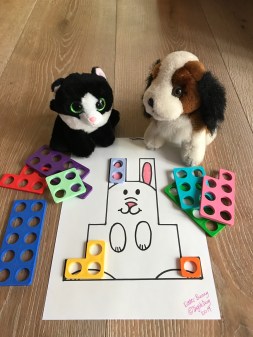
Digit Dog and Calculating Cat are trying one of the Numicon Ideas for Spring resources that they found on www.oxfordowl.co.uk
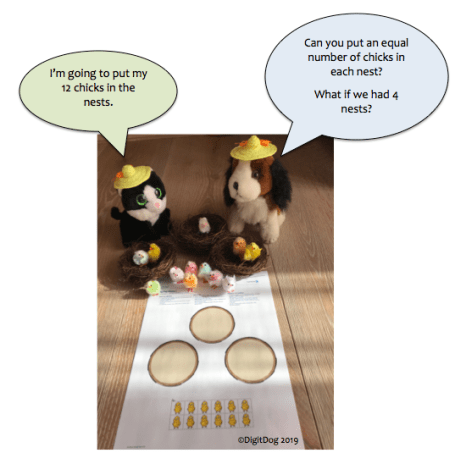
How can Calculating Cat share the chicks between the 3 nests? Try it.
How many chicks will be in each nest? Convince your friend that you are right.
Write a dividing calculation to go with your representation.
Try different numbers of nests – can you share the 12 chicks equally between 2 nests? What about 4 nests, 5 nests, 6 nests? What do you notice?
Try a different number of chicks. What happens?
 Digit Dog Challenges