Posted in Additive relationships, Calculating, Communication using symbols, Conceptual understanding, Fluency, Logical reasoning, Number sense, Strategic competence

How many bones?

Screenshot 2020-03-16 11.08.55

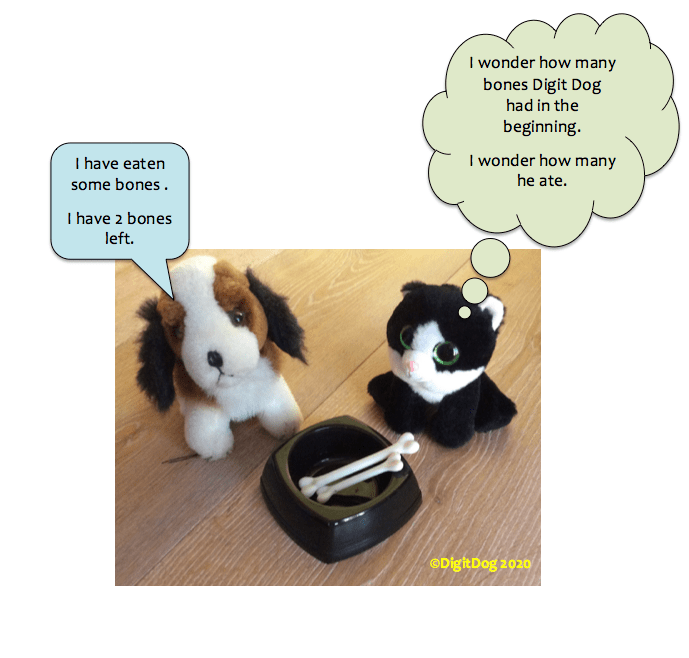
The aim of the activity is to encourage learners to think and talk mathematically – to have a mathematical conversation and use their knowledge of additive relationships. This structure of problem is more difficult than the usual “I had 2 bones and then ate 2 more, how many did I eat altogether?”

Ask:

What has Digit Dog been doing? Can you tell me in your own words? What is Calculating Cat wondering?

How many bones could Digit Dog have had in the beginning? How many could he not have had? Explain your thinking.

Take suggestions for numbers of bones.

Is there just one answer?

Use one number as an example.

If Digit Dog started with 3 bones, how many bones did he eat?

Explain how you can find out. You might want to use bones, drawings, Numicon shapes, cubes to help.

Can you write a number sentence?    3 – ? = 2

Try some other numbers of bones.  Record your answers. Can you put your answers in order? What do you notice?

Use this speaking frame to explain your work:

Digit Dog started with ______ bones, he ate _____ bones, now he has 2 bones left.

What if……….

He had a different number of bones left?

Make up your own problem like this about Calculating Cat and some fish.

The five proficiences

Learners will use:

  • strategic competence to make sense of the problem, work out what is known and what needs to be found out and to decide on a way of solving it.
  • logical reasoning to explain their thinking and work systematically to find possible numbers.
  • conceptual understanding of, and fluency with, number bonds to recognise that they need numbers with a difference of 2 or to see this pattern as they try out numbers, to see that 1 or 2 are not possible numbers to start with and to be efficient and accurate with the basic calculations.
  • communication using symbols and correct mathematical vocabulary to show and explain their thinking .

Learners will need to be competent in all five proficiencies to make up their own problems.
Posted in Calculating, Making totals, Number sense

Using Numicon® to explore equivalences

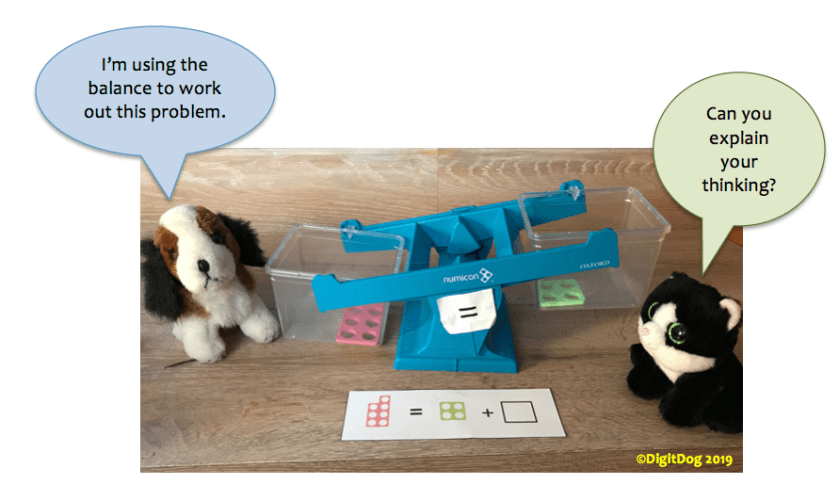
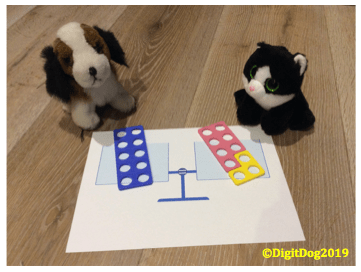
equivalent shapes

The idea of equal value is fundamental to mathematical understanding. Children need to understand that the “=” symbol means “equal value” and not “here is the answer”.

Ask:

How can you make the scales balance?

Which Numicon® shape could go in the pan balance?

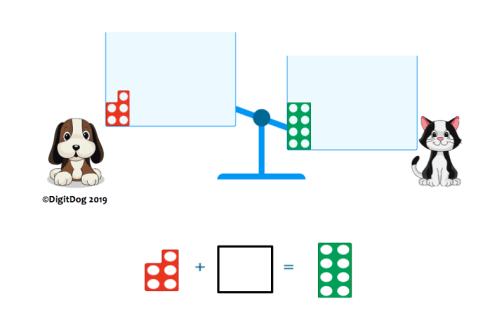
Screenshot 2019-11-11 10.43.28

What about this one?

How are you going to solve it? Explain your thinking.

What if ………..you changed the shapes?


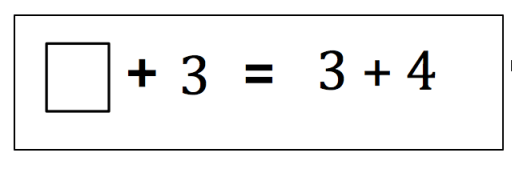
Now using numerals.

Screenshot 2019-11-13 11.41.26

Can you model this with the pan balance and Numicon® shapes?

What’s the missing number? Explain how you know. Record the sentence.

Make up some of your own.

Make sets of problems like this to put with a pan balance in your enhanced provision.

Posted in Calculating, Making totals, Numicon

Using Numicon® to find pairs that make 10…..again

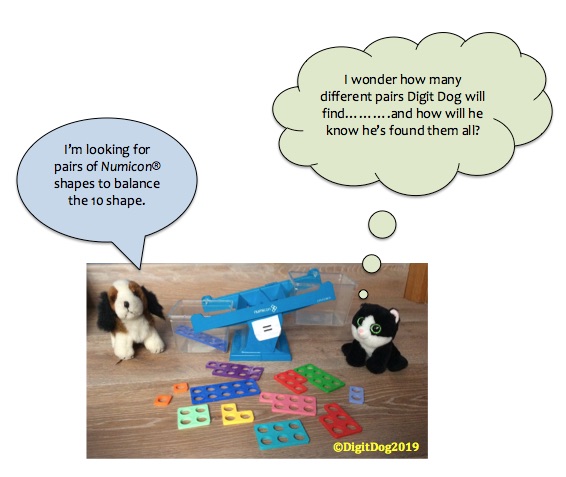
Balancing 10

Numicon® shapes are weighted and so are the perfect resource for exploring equivalences. Make sure that learners have had the opportunity to play with the scales and the shapes before doing the challenge.

Ask:

How are you going to record what you have found?

Learners might:

  1. Use the shapes and an equals sign (download here) as a record. Ask children to explain what they have done. Ask:

Are all the pairs different?

How do you know that your pair of shapes are equal to 10?

Screenshot 2019-10-17 18.09.55


2. Use a pan balance working board (download here) to record the shapes on.

Screenshot 2019-10-17 18.10.54

3. Select a written number sentence (download here) that matches their shapes.

Screenshot 2019-10-17 18.33.40

4. Record in their own way.

5. Record number sentences.

Posted in Additive relationships, Calculating, Communication using symbols, Conceptual understanding, Easter, Fluency, Logical reasoning, Strategic competence

Calculating Chicks

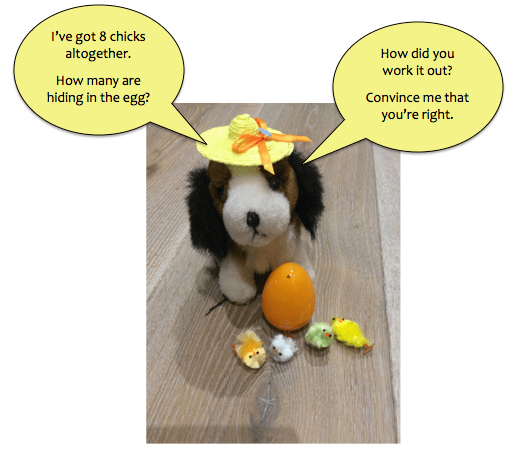
How many chicks are hiding?

Screenshot 2018-03-22 23.20.51

Digit Dog is using a hollow plastic egg and some fluffy chicks to create some number problems. This type of word problem requires more thinking than the problems such as “There are 4 chicks in my egg and 4 chicks on the floor.  How many chicks are there altogether?”, where the end result is unknown.

The aim is to encourage learners to think and talk mathematically – to have a mathematical conversation and use their knowledge of additive relationships and the link between addition and subtraction.

Ask learners to:

  • Explain what the problem is about in their own words.
  • Explain what information they know and what they are trying to find out. How many chicks are not in the egg? What number of chicks cannot be in the egg?
  • FInd a way to work out how many chicks are in the egg.
  • Describe the strategy they have used. They might:
    • act it out – using children themselves (with chick masks)
    • act it out – using toy chicks
    • use counters to represent the chicks
    • draw pictures of the chicks
    • use an eight Numicon shape to lace the chicks on
    • use number bonds
  • Convince everyone that their answer is correct. Use sentence starters such as:
    • I know the answer is 4 because ….
    • First of all I…………then I………
    • I know that …….. so…………
  • Write a number sentence
  • Change the number of chicks in the egg.
  • Think about a What if………?

What if there were more than 8 chicks altogether?

What if the story wasn’t about chicks?

Can learners transfer their thinking to a new problem?

Make up some of your own problems like this one for your friend.

The five proficiences

Learners will use:

  • strategic competence to make sense of the problem, work out what is known and what needs to be found out and to decide on a way of solving it.
  • logical reasoning to explain their thinking, to make sense of the problem and to use what they know to work it out.
  • conceptual understanding of, and fluency with, number bonds for 8 in order to use them to solve the problem and to be efficient and accurate with the basic calculations.
  • communication using symbols and correct mathematical vocabulary to write number sentences and explain their thinking .

Learners will need to be competent in all five proficiencies in order to create their own problems.
Posted in Calculating, Games

Play PIG

When Digit Dog saw that this year was the Chinese Year of the Pig, it reminded him of the dice game PIG.

Play PIGpig

PIG is a game for 2 – 6 players

You need one dice.

Rules

The aim of the game is to get to 50.

Players take turns to roll the dice as many times as they like, adding the numbers as they go. A player can end their turn at any time and “bank” their points.

BUT if a player rolls a 1, they lose all their unbanked points and their turn is over. When you roll a 1 you shout PIG!

The first player to score 50 or more points wins.

For example:

screenshot 2019-01-30 09.15.40

It is Digit Dog’s turn and he throws a 2, 5, 4 and 3. His total so far is 14.

What shall he do now? Shall he throw again and hope that he doesn’t throw a 1? If he throws a 1 he will lose all 14 points. Or shall he bank his 14 points so that they are safe and end his go?

Calculating Cat has banked 20 points from her first turn. On her next turn she throws 2, 6 and 5 so she has 13 points unbanked. What shall she do? Bank the 13 points and add them to her 20 points so that she has a total of 33? Or throw again? If she throws a 1 she will lose her 13 points.

Variations:

  1. Change the target score – make it lower or higher. The first player to score 100 or more points wins. The first player to score 30 or more wins.
  2. Use a 1 – 3 dice and a lower target score.
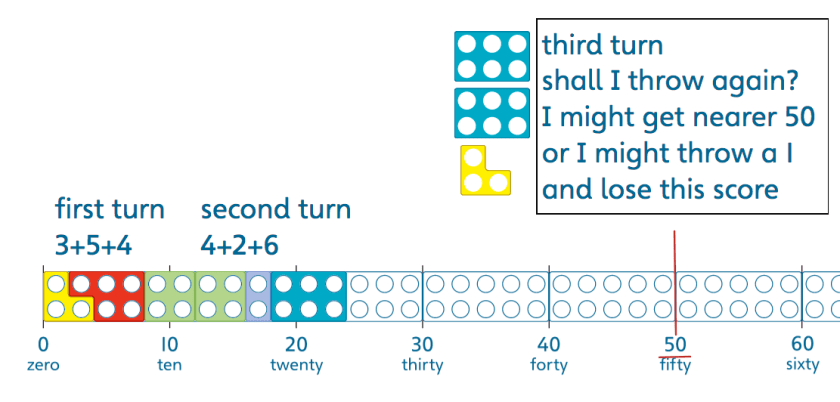
  3. Make the calculating more accessible by collecting Numicon shapes each time you roll and put them on the number line. screenshot 2019-01-30 09.31.58
  4. Use 2 dice. If a player rolls one 1, their turn ends and they lose their points for that turn. If a player rolls double 1 , their turn ends and they lose all banked points as well as points from that turn.
  5. Use 2 dice. Rolling one 1 ends the turn and all unbanked points. Throwing a double earns double score – so double 2 = 8 etc. and double 1 scores 25.
Posted in Calculating, Chinese New Year, Making totals

2019 is the Chinese Year of the Pig

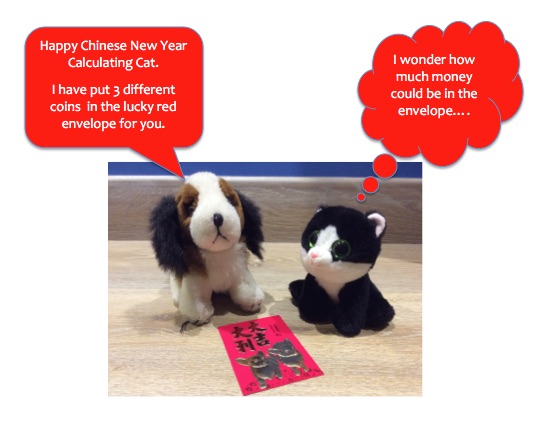
Digit Dog is getting ready to celebrate Chinese New Year which begins on February 5th and ends on February 19th.

He has given Calculating Cat a lucky red envelope with some coins in it. See if you can work out how much money could be in the envelope.

red envelope

Extend the challenge with ideas in the latest challenge card – click here or download from www.primarytreasurechest.com

Posted in Calculating, Problem solving

Treasure Hunt

Collect the gold coins

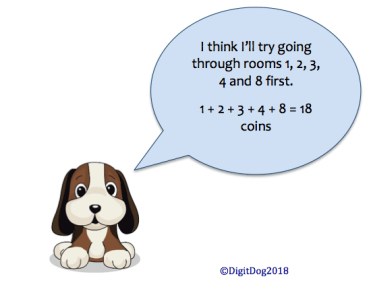
How many gold coins can Digit Dog collect? Digit Dog is trying to collect the pirate’s gold coins. Here is a map of where the pirate keeps the coins (download and print your map here) 

Use the Digit Dog pirate counters to move on the board (download here)

screenshot 2019-01-07 18.14.29

There are 8 rooms and the number tells you how many coins are in each room. Digit Dog has to go into the rooms and collect the coins BUT he can only go into each room ONCE.

How many coins can Digit Dog collect?

How many different ways can he go though the rooms?

Can you record his routes? How might you do this?

screenshot 2019-01-08 08.55.14


screenshot 2019-01-08 09.01.26

What’s the most coins you can collect?

What’s the smallest number of coins?

Look for children who are planning the routes and can explain their thinking.

Simplify the task

  1. Put gold coins in each room so that Digit Dog can collect them as he goes through. He can then count them at the end to find out how many he has.
  2. Put Numicon® shapes in each room so that Digit Dog can collect a shape when he has gone through the room. These can then be added together to find the total number of coins. Using the shapes encourages children to calculate rather than count in ones.

Screenshot 2018-12-04 16.58.53

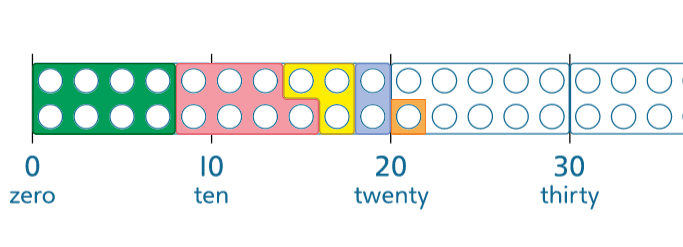
I went to rooms 1, 2, 3, 7 and 8. How many coins did I collect altogether?

Screenshot 2018-12-04 17.01.28

I have put the shapes on the number line so that I can see the total without counting in ones.

Calculating Cat
Calculating Cat says that you can make 10s with the shapes and that makes it easy to find the total. 10, 20, 21


Screenshot 2018-12-04 16.59.30

Encourage children to use number bonds to find the totals.

3. Use the blank store and put just numbers 1, 2 and 3 in the rooms.

4. Put just Numicon® shapes or coins in the rooms – no numerals.

Extend the challenge

Use the blank store and put higher numbers in each room.

Challenge children to find all possible routes and to explain how they know they have found them.

Posted in Calculating, Christmas, Numicon, Problem solving

Christmas challenge – Day 6

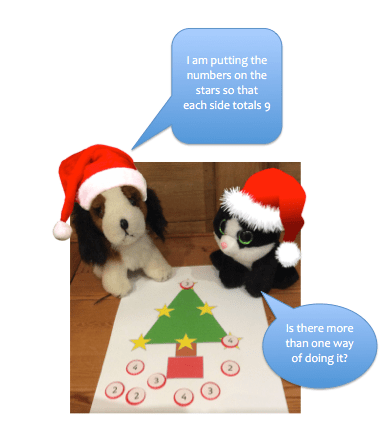
6 Christmas stars – a puzzle

Christmas tree

Download the tree

Look at the picture. What do you notice?

What are Digit Dog and Calculating Cat trying to do?

What are you going to do first?

Check that each side totals 9.

What do you think? Can you do it another way?

To simplify the task

Use Numicon® shapes instead of numerals.

IMG_2130


Variation

Use numbers / Numicon® shapes 1 to 6 and make each side total 9. Then try totals of 10, 11 and 12. See Number Round Up on https://nrich.maths.org/188

Posted in Calculating, Christmas, Number sense, Numicon

Christmas Challenge – Day 2

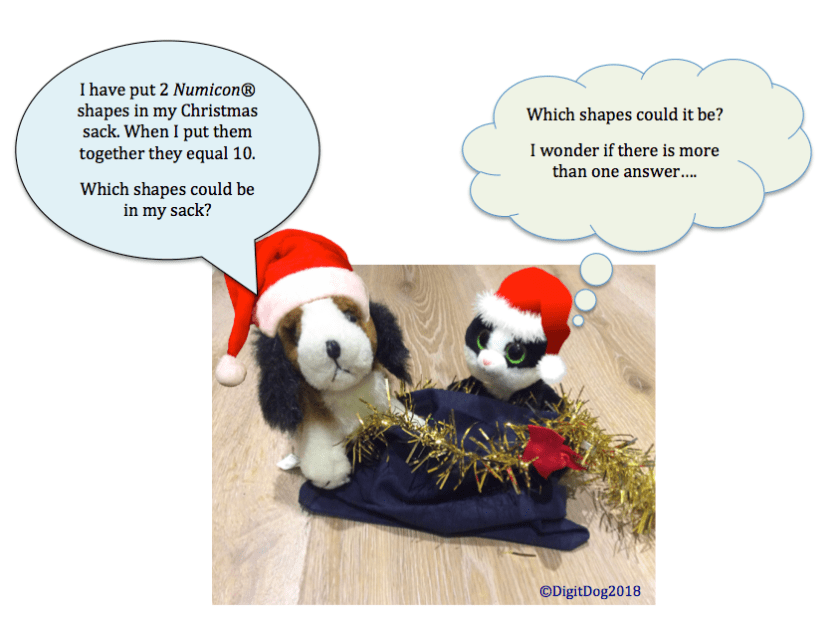
Two Numicon® shapes – which shapes are in the Christmas sack?

Screenshot 2018-11-30 18.20.20

Show me 2 shapes that could be in the sack. Why do you think that? Are you sure? Convince me.

Are they the only 2 shapes it could be?

How many pairs could it be?

If I show you one of the shapes will you know for sure what the other one is?

Encourage children to explain their reasoning. At first, why don’t they know for sure which two shapes are in the sack? How many possible pairs can it be? Show one pair, and another, and another………..

When you know one shape, how can you be sure what the other shape is?

Variations

  1. Put one shape in the sack and give children clues so that they can work out which shape it is. An opportunity to model mathematical language.  My shape is:
    • one more / one less than………
    • two more/ two less than………
    • in between……
    • an odd/even number
    • If I add …and …..I get this number
    • If I take my number away from 10, I am left with……
    • The difference between my number and 6 is………
    • ……more than……
    • a multiple of ……….
    • a factor of………Get the children to ask questions about your shape to work out which one it is.
  2. Put 3 shapes in the sack. The total is 15 which shapes could they be? What if I show you 1 shape, how does that change your thinking?
  3. Vary the totals, vary the number of shapes.


Posted in Calculating, Making totals, Numicon

Total 6

An extension of Investigating totals

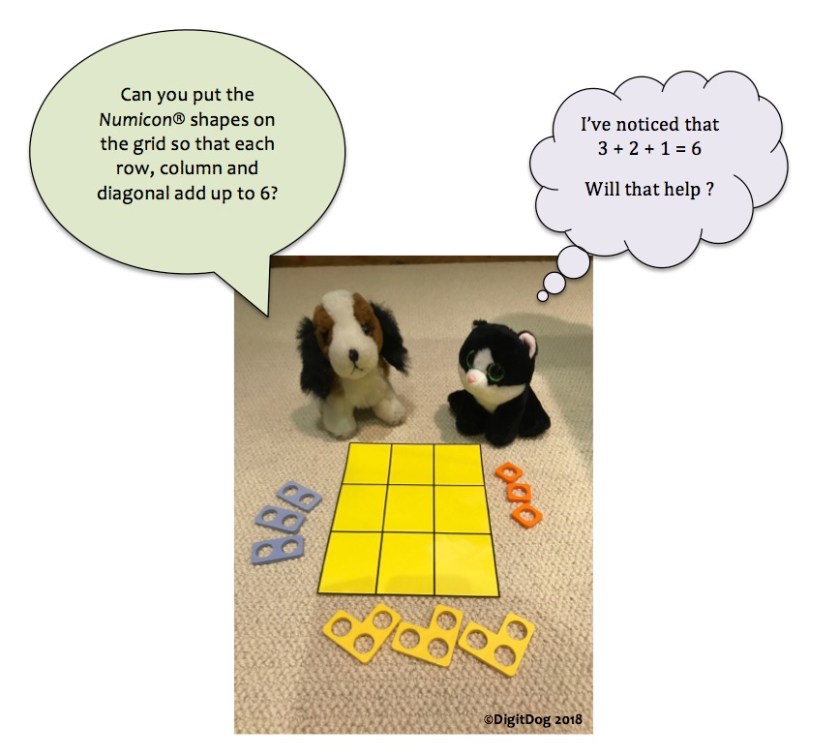
Put the shapes on the grid but this time each row, column and diagonal has to have the same total.

6 grid

You might want to make the task simpler:

  1. Make each row total 6
  2. Make each column total 6
  3. Make the rows and columns total 6
  4. Include the diagonals.

Which shapes are you using in each row / column? Why?

Is there more than one way of completing the grid?

Look at your partner’s grid. What is the same and what is different?

Make the task more challenging:

  1. Use digit cards instead of the shapes.
  2. Don’t give the total – Can you put the Numicon shapes on the grid so that each row, column and diagonal add to the same total?

What do you think the total might be? Why?

How are you going to start? What are you going to try first?

What if.……..you used three different consecutive shapes?

3 twos, 3 threes and 3 fours                                 3 threes, 3 fours and 3 fives

Screenshot 2018-09-26 14.28.32or   Screenshot 2018-09-26 14.28.43

What will the totals of each row be now?

Screenshot 2018-09-26 15.51.01