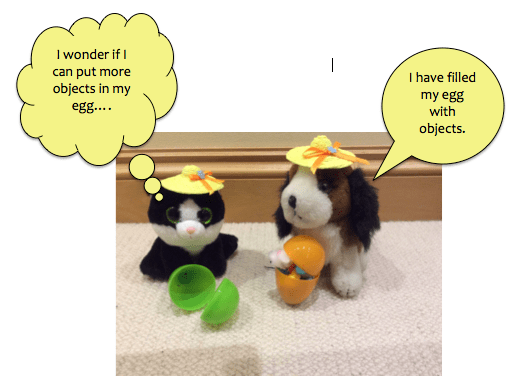
Digit Dog and Calculating Cat are trying to fill their plastic eggs with as many objects as they can.
Try this out for yourself – each person needs an empty plastic Easter egg or any small container to fill with as many objects as they can. The one who collects most objects is the winner.
Count the objects to see who has the most. Organise your objects so that you can see how many there are without counting in ones.
Do this by:
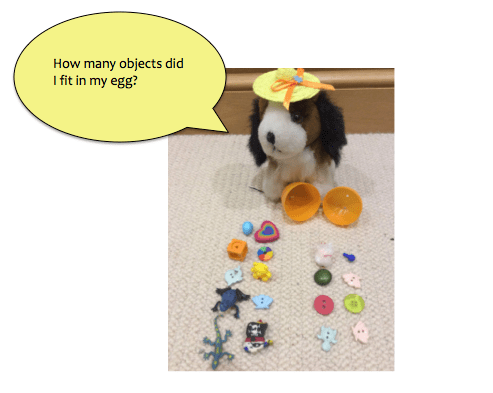
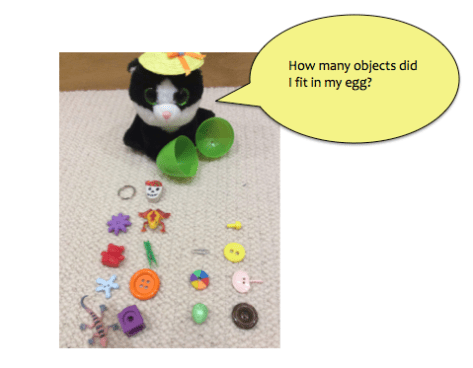
Organising the objects into tens.How many do you have? “I have one ten and eight”.
How many objects does Digit Dog have? Don’t count in ones.
Does he have more or fewer objects than Calculating Cat? Explain how you know.
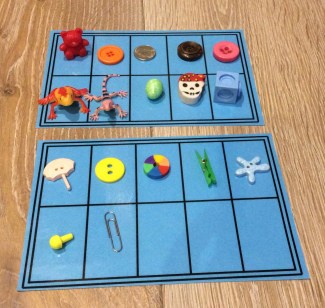
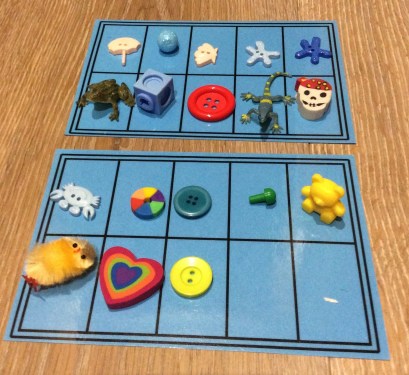
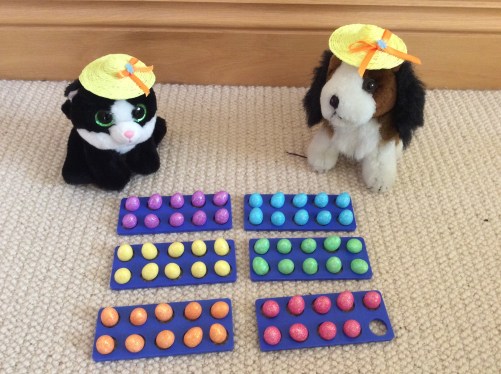
2. Putting the objects on a 10-frame (download here).
Calculating CatDigit Dog
Who collected the most objects? How do you know?
How many more objects does Calculating Cat need so that she has 20? How can you work it out by looking at the 10-frame?
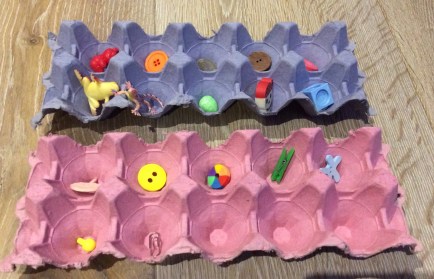
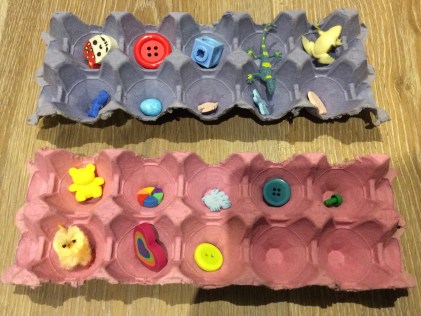
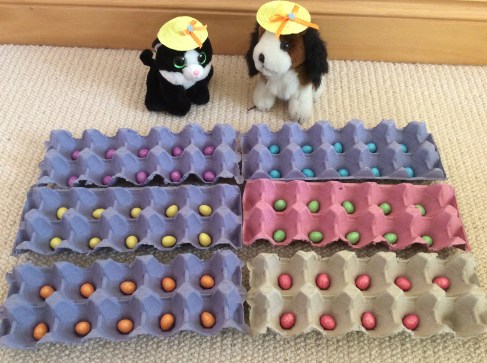
3. Putting the objects in egg boxes.
Calculating CatDigit Dog
Who was the winner? Who had more objects? Who had fewer objects? Can you quickly count the objects? Make a chart to show how many objects each person collected.
A dice with numbers 1 – 3, or a set of digit cards (download here double sided to have Digit Dog on the back) that are placed face down in a pile and then the top one is turned over for each turn
10 eggs for each player (cut out eggs here or use mini chocolate eggs)
Take turns to throw the dice. Count the number of eggs and put them on the 10 frame. The first person to get 10 eggs wins.
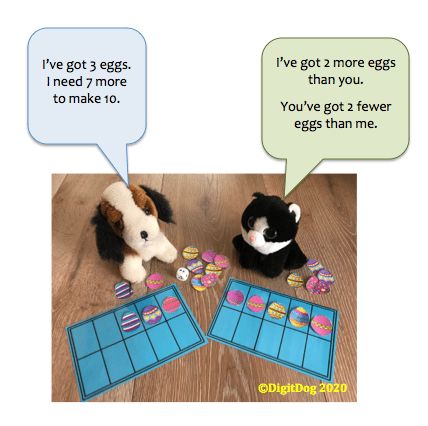
As you play describe how many eggs you have:
“I have ……… eggs. I need ……….more to make 10”.
During the game take time to look at each other’s frames and talk about the numbers of eggs on each frame.
Use the sentences like Calculating Cat:
“I have ……… more eggs than you. You have …….fewer eggs than me.”
“I have …….fewer eggs than you. You have ……..more eggs than me.”
How many eggs does Digit Dog have?
How many eggs does Calculating Cat have?
Who has fewer eggs? How many fewer? Explain how you know.
Who has more eggs? How many more?
How many more eggs does Digit Dog need to make 10? What about Calculating Cat?
Now play Race from 10
Start with 10 eggs. Throw the dice and take away that number of eggs. The first person to have no eggs is the winner.
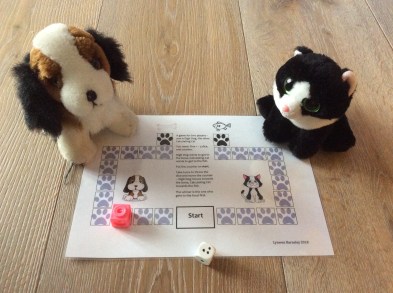
Digit Dog and Calculating Cat have been practising their counting. Play their game by downloading it here.
You need one counter and a dice (a dice with numbers 1, 2 and 3 is ideal but you can play with an ordinary 1 – 6 dice)
The game is for 2 players – one will be Digit Dog and the other will be Calculating Cat.
Put the counter on Start. Both players move the same counter BUT Digit Dog moves towards the bone and Calculating Cat moves towards the fish. Take turns to throw the dice and see who gets their food first. There will be a lot of moving back and fro.
When children throw the dice ask them to say how many spots there are without counting in ones – this is called subitising.
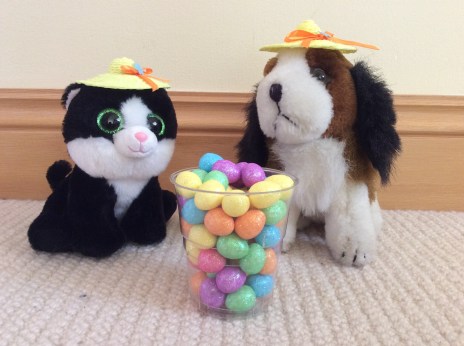
Digit Dog and Calculating Cat are estimating how many eggs are in the pot.
“I wonder how many eggs are in the pot?”
Can you estimate?
What do you think?
Will there be more than 10? How many more? A lot more? A few more?
Will there be more than a 100?
Digit Dog and Calculating Cat used the egg boxes to help find out how many eggs there are. They wanted to organise the eggs so that they could see how many there are without counting in ones.
What do you notice?
How do the egg boxes help to see how many eggs there are?
How can you count them?
What questions can you ask?
Next they used the Numicon shapes to help them count.
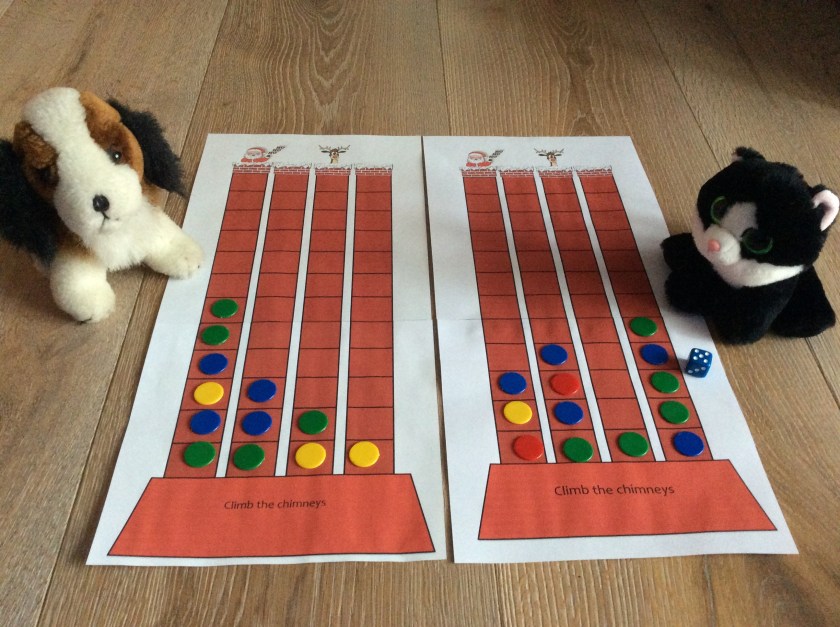
This is a simple game to give young children practice in counting. The game gives you the opportunity to talk about counting and assess children’s thinking. How does the child count the dots on the dice – count in ones or recognise the number of dots without counting? Can the child say the number on the dice and then count that number of counters accurately?
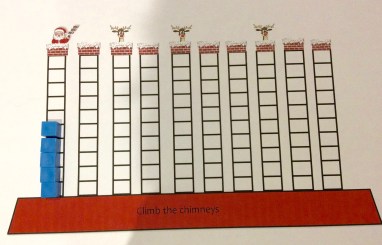
You need to make game boards with it 4 “chimneys” for each child.
How to play: Children have a board each and take turns to throw the 1 – 6 dice and collect the correct number of counters. They then place the counters on one of the chimneys – their choice, but all the counters for that turn have to go on the same chimney. The object is to fill all the chimneys with counters. You have to roll the correct number to finish filling any chimney.
Ask:
How do you know you’ve got the right number of counters to match your roll on the dice?
How many counters did you put on the chimney?
How many more counters do you need to fill the chimney?
Which chimney has most counters? Least counters?
Game 2:
For an easier game play with boards that have 10 spaces and a dice with numbers 1 – 3. Either play with counters in the same way as Game 1 or make links with the Numicon® shapes. Pick up Numicon® shapes instead of counters and place on the chimneys.
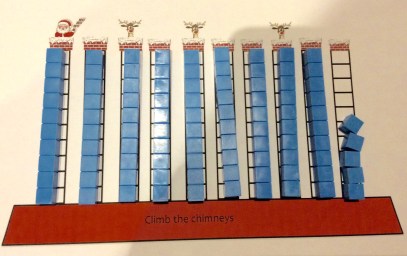
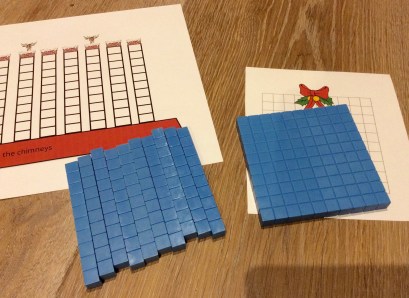
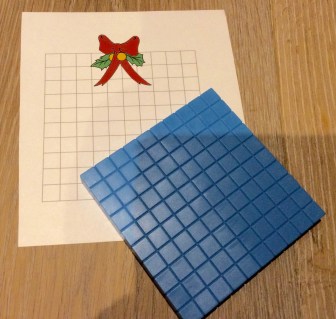
How to play: Children have a board each and take turns to throw the dice. The number they roll indicates how many “ones” they count and place on the first chimney. When they have 10 “ones”, they exchange them for one “ten” and put that on the chimney. Continue until they have 10 tens. When they have 10 tens they exchange this for one “hundred” and collect a present.
Throw the dice, collect the ones and put them on the first chimney.When you have 10 ones, exchange them for 1 ten.Continue in this way until you have 10 tens – you have to have the exact number to finish.Now exchange your 10 tens for one 100 block and claim your present.
Great book for investigating division and remainders and arrays and multiplication and number patterns and …………..
The 25th bug squadron (it has 25 bugs) needs to organise itself into lines to march in the bug parade.
“The 25th squadron marched past the bug crowd,
bound and determined to make their queen proud.
The troop had divided by two for the show.
Each bug had a partner – except soldier Joe”.
Poor Joe is left out and gets into trouble because the queen “likes things tidy”.
Find out what happens when the squadron divides into threes and fours. Guess who is left out each time. However, there is a happy ending when the bugs decide to march in fives:
“Five lines of soldiers with five in each row……
perfect at last – and that’s counting Joe.”
Act out the story with children themselves – What would the name of your class squadron be?What would happen if your class squadron was trying to march in tidy rows to please the queen? How many would be in each row? When would there be remainders like Joe?
What about other classes? Would they march in the same way as you?
Investigate different squadrons and tell their stories.
Use different resources to act out the story and investigate other numbers.
Subitising is being able to look at a small set of objects (up to 5) and say how many there are without counting in ones. Once children can count objects reliably we want them to move onto subitising – an important step in the development of number sense.
Perceptual subitising – instantly recognising a small group of objects.
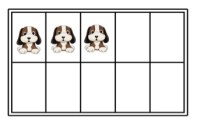
How many Digit Dogs can you see?
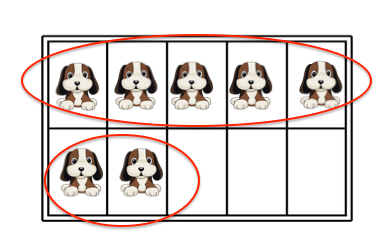
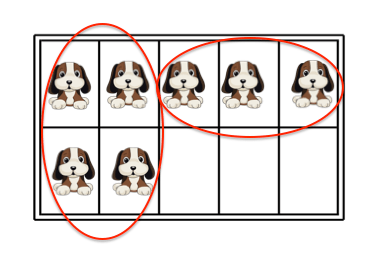
Conceptual subitising – seeing smaller groups within a larger group to say how many there are without counting in ones.
I know there are 7 because I see 5 and 2 more.
I know there are 7 because I can see 4 and 3 more.
Show these slides for a couple of seconds to practise subitising. Click once to reveal the image, click again for it to disappear.
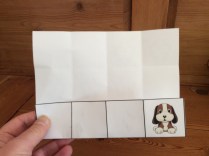
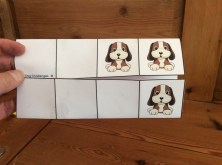
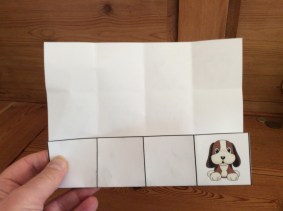
Use the flik-flaks as a quick way to practise number bonds to 10.
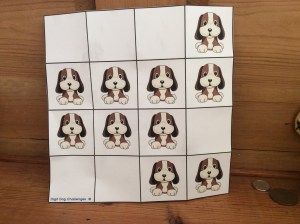
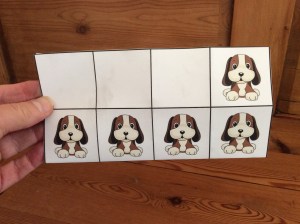
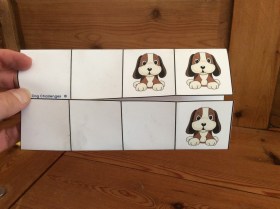
Show children the flik-flak and ask:
“How many dogs can you see?” “How did you count them?”
Count the dogs in each row. Ask questions such as “Which row has most dogs?” “Which row has the fewest dogs?” “Which row has one more than the bottom row?”
Before continuing, make sure children are confident that there are 10 dogs altogether.
Fold the flik-flak:
Ask:
“How many dogs can you see now?”
“How many dogs are hidden?” “How do you know?” “Explain your thinking”.
“How many dogs altogether?”
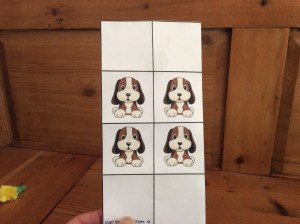
Fold the flik-flak in a different way:
Ask the same questions.
“How many dogs can you see now?”
“How many dogs are hidden?” “How do you know?” “Explain your thinking”.
“How many dogs altogether?”
Keep folding the flik-flak to explore all the combinations of numbers to make 10.
I can see 1 dog. 9 dogs are hidden. 9 + 1 = 10I can see 3 dogs. I know 7 are hidden because 3 +7 = 10.I can see 7 dogs, so 3 dogs must be hidden because 3 + 7 = 10














 Digit Dog Challenges